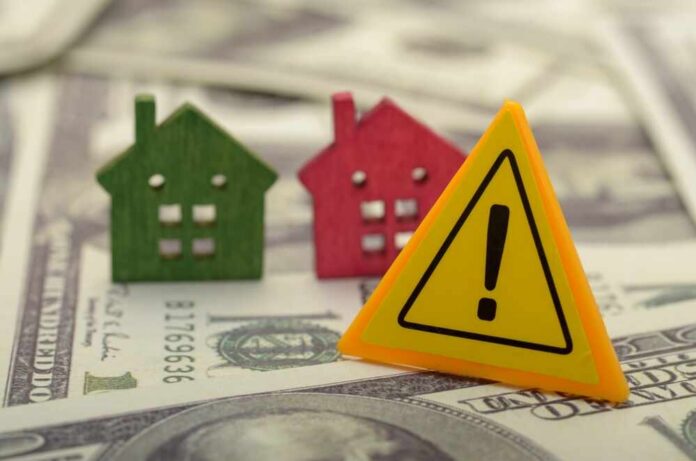
Mortgage demand is sliding again—proof that “higher for longer” interest rates are still squeezing family budgets even as Washington promises things are under control.
Story Snapshot
- Mortgage applications fell by more than 10% as the 30-year fixed rate climbed to its highest level since October.
- High rates, not risky lending, are the main driver—creating a “rate lock-in” that keeps would-be sellers stuck and inventory tight.
- A brief dip in rates near 6.08% in September 2024 didn’t revive purchase demand; rates later pushed higher, undermining momentum.
- Forecasts across major housing trackers still point to historically weak sales near 4 million, with only modest improvement expected if rates ease.
Mortgage demand drops as rates climb back near recent highs
Mortgage demand fell more than 10% while 30-year fixed rates rose to their highest level since October, a combination that typically signals buyers are tapping out on affordability.
Data across housing analysts and industry trackers shows rates have largely stayed in a punishing 6% to 8% band since the Federal Reserve began fighting inflation with aggressive hikes. When rates rise, refinance interest rates fade first—then purchase activity cools as payment shocks hit.
The September 2024 rate drop to about 6.08% briefly helped refinancing, but it did not translate into a meaningful rebound in purchase demand.
By late October, rates were back up, with Freddie Mac tracking an average near 6.43% and reporting levels reaching roughly 6.72% later that month.
That whiplash is a recurring theme: small declines spark short-lived optimism, but volatility and stubborn inflation expectations keep sidelined buyers from committing.
Why this housing slump doesn’t look like 2008—even if it feels bleak
This downturn doesn’t match the mechanics of the 2008 crash, when risky subprime lending and defaults drove forced selling. Current weakness is more about affordability and “lock-in.”
Homeowners who financed at 3% or lower in 2020–2021 have little incentive to sell and take on a new mortgage at today’s rates. That keeps resale inventory constrained even when demand softens, which helps explain why prices can remain firm despite low transaction volume.
Mortgage demand drops more than 10% as rates hit the highest level since October https://t.co/vKLVSFMn9Y
— CNBC (@CNBC) March 25, 2026
Analysts tracking the market describe inventory as still meaningfully below pre-pandemic norms, even after recent improvements. Existing-home sales have hovered around levels associated with multi-decade lows, and some projections peg total 2024 sales at around 4 million.
The result is a slow grind: fewer listings, fewer deals, and fewer chances for younger families to buy in—especially when every quarter-point in rates adds meaningful cost to a monthly payment.
Fed policy, inflation, and the affordability trap facing families
The Federal Reserve sets the backdrop because its benchmark rate influences the broader cost of borrowing. Forecasters at Fannie Mae raised their 2024 rate outlook earlier after inflation and strong jobs data delayed expected cuts.
Freddie Mac has also warned that rate volatility weighs on housing activity even when the wider economy shows resilience. For households, this becomes an affordability trap: high prices meet high rates, and the monthly payment becomes the deal-breaker.
Regional pain, a resilient new-home market, and what may come next
Even where national totals look steady, regional strain shows up in declines in applications and stalled mobility. Reports highlight sharper declines in applications in places like the Bay Area and parts of Florida, consistent with the idea that expensive metros are hit first when financing costs rise.
Meanwhile, the new-home market has held up better than existing sales in some periods, partly because builders can offer incentives that individual sellers typically can’t match.
Looking ahead, several outlooks point to only modest improvement rather than a dramatic rebound. Some forecasts anticipate a gradual thaw as “life events” force moves—new jobs, growing families, retirements—slowly loosening supply.
Others project prices flattening through 2026, suggesting the market may normalize more through income growth than through a sudden drop in rates. What’s clear is that, until financing costs ease meaningfully, the middle-class path to ownership remains steep.
For conservative households already worn down by years of inflation and fiscal dysfunction, the housing squeeze lands like a second tax—one that hits families trying to build stability through ownership.
The research available here focuses on rates, sales, and forecasts rather than new policy proposals, so it doesn’t provide a single political fix. But the numbers underline a basic reality: when borrowing costs stay elevated, markets freeze, mobility drops, and the American Dream gets rationed.
Sources:
Higher mortgage rate forecast leads to decline in 2024 home sales expectations
2024 mortgage applications data highlights growing demand for homes
U.S. economy remains resilient with strong Q3 growth
Rate decline not enough to spark more purchase activity
US home sales expected to drop lower still after historically weak 2024